Basketball Betting Strategies
Basketball Betting Strategies: The Complete UK Guide
 Available in US
- What Sharp UK Basketball Bettors Know Before They Place a Single Bet
- Basketball Betting Strategies in UK
- Why Basketball Betting is Growing Fast in the UK
- The UK Betting Regulatory Framework You Must Know
- Core Basketball Betting Markets Explained
- The Point Spread: Basketball’s Most Popular Market
- Key Strategic Factors Every UK Basketball Punter Must Analyse
- Bankroll Management: The Edge Most Bettors Ignore
- Best UK Bookmakers for Basketball Betting
- Responsible Gambling and the Real Risks
- Frequently Asked Questions About Basketball Betting in the UK
Sharp basketball bets, built on data.

What Sharp UK Basketball Bettors Know Before They Place a Single Bet
- NBA home court advantage has declined from 60% win rate (2000–2013) to around 54% — markets still price it as if nothing changed, which creates systematic value on road teams.
- Road teams on back-to-back games early in the season (games 2–12) have covered the spread at 57.7% since 2004 — a well-documented edge most UK punters ignore entirely.
- The Gambling Levy Regulations 2025 are now in force — all UKGC-licensed bookmakers operate under new rules, and the stake limits introduced in April 2025 signal a tightening regulatory environment every bettor should understand.
- UK online sports betting generates approximately 290 million bets per month — market efficiency is high on game lines, but prop markets and early lines remain exploitable.
- Bankroll management — not pick quality — is the primary reason most basketball bettors lose long-term. A 1–3% flat stake per bet is the baseline every serious punter needs before worrying about strategy.
Basketball Betting Strategies in UK
Nine years ago, I lost three hundred pounds in a single weekend betting NBA games I had no business touching. I was backing teams based on highlights I had watched on YouTube, chasing losses with bigger stakes, and completely ignoring the fact that UK bookmakers were pricing those lines very differently from what I was seeing quoted on American forums. That weekend taught me something I now consider the foundation of everything I do: basketball betting in the UK is its own discipline. It is not American sports betting with a pound sign in front of the odds.
The UK punter faces a genuinely distinct environment. You are operating under UKGC regulation, working with decimal and fractional odds formats, accessing a market that covers NBA, EuroLeague and the British Basketball League with wildly different liquidity levels across each, and navigating a regulatory framework that shifted significantly in 2025. The strategies that work for an American bettor staking on DraftKings do not map cleanly onto what works for someone using a UKGC-licensed bookmaker on a Tuesday night for a West Coast tip-off.
This guide covers everything I use in practice: the regulatory context you cannot afford to ignore, the core markets and how to read them, the strategic factors that actually move ATS results, and the bankroll discipline that separates consistent punters from the majority who run out of money before they ever develop an edge. The data is sourced from the Gambling Commission, academic research, and verified ATS databases. The strategy is what I have tested over nearly a decade of serious basketball betting. Let’s get into it.
Why Basketball Betting is Growing Fast in the UK
When I started in this niche, telling someone you bet on NBA games in the UK was met with genuine confusion. Football was everything, cricket was summer, and basketball was something Americans watched. That perception has shifted more than most people in the industry have fully registered.
The UK gambling market generated £16.8 billion in Gross Gambling Yield during the financial year to March 2025 — a 7.3% increase year on year, according to Gambling Commission data. The remote sector, which covers everything you do on a phone or laptop, hit £7.8 billion, up 13.1% on the prior year. That growth does not happen without serious audience expansion, and basketball is one of the sports pulling in new bettors, particularly among younger demographics.
£16.8 billion — Total UK gambling market GGY in 2024–25, up 7.3% year on year. The remote sector alone hit £7.8 billion, growing at 13.1%. This is the market landscape you are operating in when you bet on NBA from a UK bookmaker.
The numbers on participation confirm the trend. More than 5% of British adults now bet on sport online, and basketball — led by the NBA — has moved into third place behind football and cricket among UK bettors, a position it did not hold five years ago. Mobile has been the engine of that growth: 78% of all global online sports bets were placed on mobile in 2024, and among UK adults aged 18–24, that figure hits 76%. The NBA’s late-night tip-offs, the social media presence of its stars, and the accessibility of highlights have created a generation of UK punters who follow the league seriously.
UK online sports betting volumes have almost doubled from approximately $2.3 billion to $4.2 billion in recent years, with projections placing the market at $21.3 billion by 2030. Basketball betting is growing faster within that market than almost any other sport.
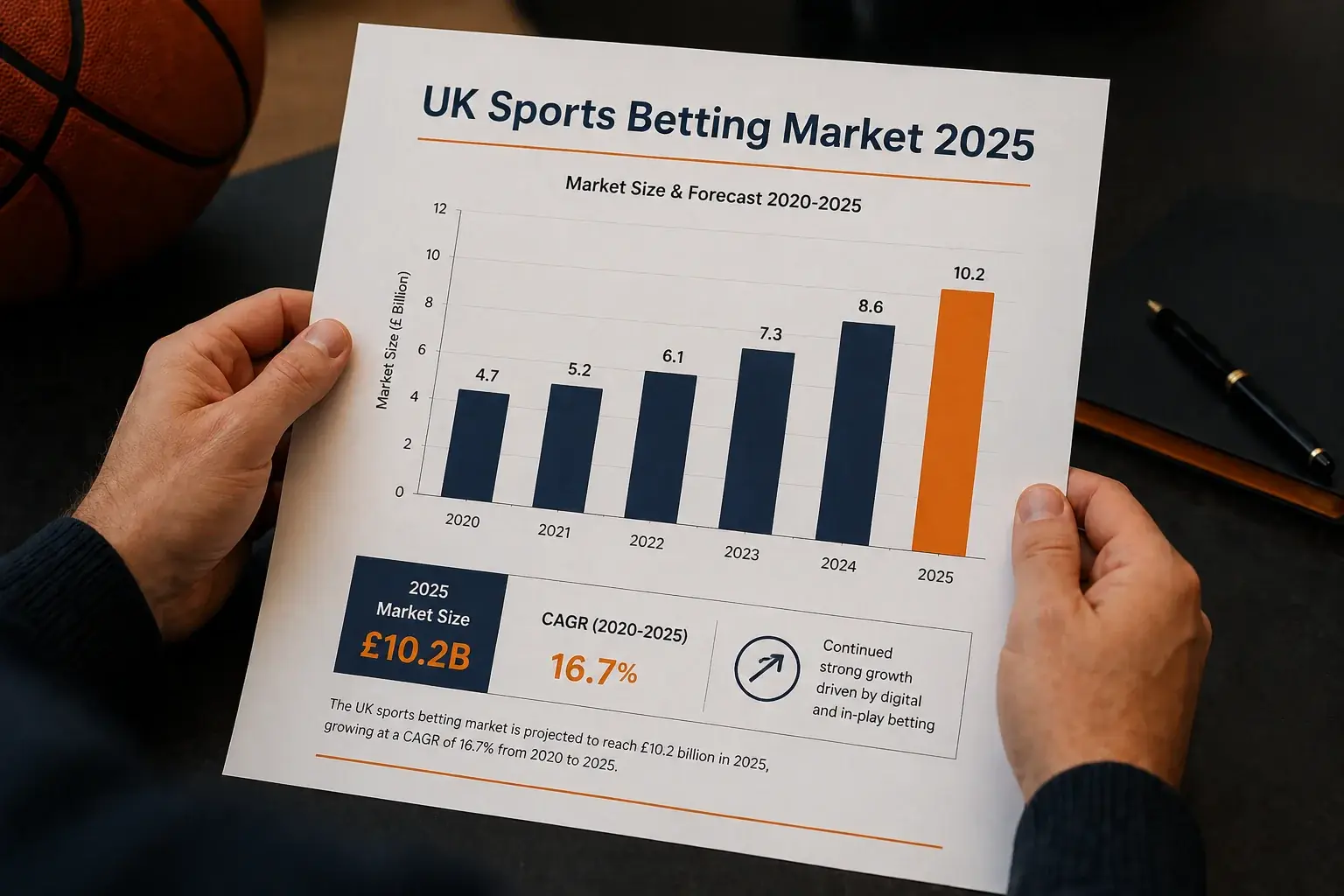
What this means practically is that UK bookmakers are investing more in their NBA coverage — deeper prop markets, faster in-play odds, more competitive lines on big games. That is good for value hunters. It also means the easy money on poorly-priced lines from five years ago is harder to find. The market has matured, and so must your approach to it.
The UK Betting Regulatory Framework You Must Know
I have spoken to UK punters who have been betting basketball for years without knowing the difference between a UKGC-licensed operator and an offshore site they found via a Google ad. That distinction is not a legal technicality — it affects your protection as a bettor, the disputes process available to you, and increasingly, the affordability checks that will determine how much you can deposit without being asked to justify it.
Every operator licensed by the UK Gambling Commission is required to meet standards that offshore bookmakers simply do not. This covers segregation of player funds, responsible gambling tools, complaint resolution via the Independent Betting Adjudication Service, and compliance with advertising standards. If you are using a non-UKGC operator to bet on NBA because the odds look marginally better, you are trading legal protection for half a point on a spread. That is a bad trade.
UKGC licensing: Any legitimate UK bookmaker you use for basketball betting must hold a Gambling Commission licence. You can verify this on the UKGC’s public register. All operators must display their licence number and link to responsible gambling resources including GambleAware and GamStop.
The regulatory environment changed significantly in 2025. The Gambling Levy Regulations came into force on 6 April 2025 — this is a statutory levy on licensed operators, replacing the voluntary system that existed before. The funds raised go directly into research, education and treatment for problem gambling. For bettors, the practical effect is that the bookmakers you use are now contributing to the UK’s public health infrastructure around gambling, which is a meaningful shift in how the industry is governed.
2025 Regulatory Update: Stake limits for online slots came into effect in April 2025 — £5 per spin for players aged 25 and over, £2 per spin for 18–24-year-olds. While this directly targets slots rather than sports betting, it signals the direction of UK gambling regulation. Affordability checks, stake limits and enhanced due diligence requirements are expanding across product types. Operators are now required to monitor and intervene on betting patterns more proactively than before.
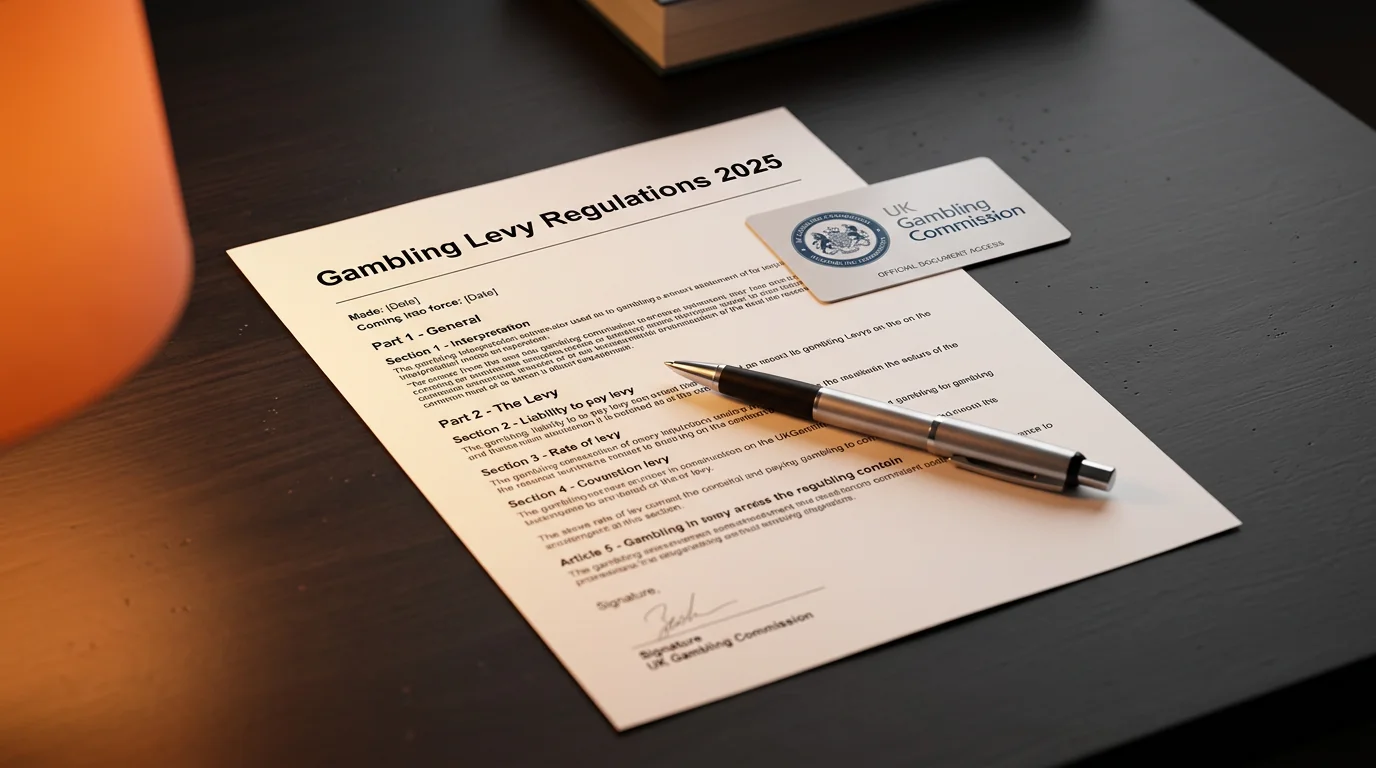
Legal analysis of the 2025 reforms described them as representing “a decisive shift in UK gambling regulation” that positions the UK as a global leader in responsible gambling. What that means for basketball punters is a more structured environment: more affordability questions, more friction on large deposits, and more data sharing between operators via the proposed single customer view. None of this stops serious bettors from operating effectively — but it does mean you need to keep your bankroll management disciplined enough that you are not triggering interventions based on problem gambling patterns.
The Gambling Commission’s data gives useful context here: around 290 million online bets on real events are placed in the UK every month. The regulator has significant visibility into how bettors behave at scale, and the compliance pressure on operators is higher than it has ever been.
Core Basketball Betting Markets Explained
Most UK punters who start betting basketball fall into the same trap: they treat it like football betting. Back the winner, maybe take a handicap if the favourite looks very strong. That approach ignores four or five markets where the edge is structurally more accessible — and leaves a lot of value on the table.
Basketball generates approximately 10% of global sports betting activity, with NBA accounting for around 28% of total handle at major American operators. That volume creates market depth, but it also means the game lines — moneyline and point spread — are priced very efficiently on high-profile matchups. The most exploitable markets are frequently the less liquid ones: player props, early lines, and in-play opportunities.
Here is how the core market types work in the UK context:
Moneyline
The simplest bet: pick the winner. In the UK, this is expressed in decimal odds — a team priced at 1.65 returns £1.65 for every £1 staked including your stake back (£0.65 profit). The moneyline is most useful when you are backing a significant underdog where the point spread would require them to win by less than a handful of points — a tall order against elite teams. On tight matchups between evenly-matched teams, moneyline and spread converge in value.
Point Spread
The dominant basketball market globally. The bookmaker sets a handicap — for example, -6.5 for the favourite — meaning they need to win by seven or more for a spread bet on them to pay out. UK operators typically offer spread markets at odds very close to 1.90 on both sides (equivalent to -110 in American format). The spread is where most of the analytical work in basketball betting happens, and it is covered in depth in my guide to NBA point spread strategy.
Game Totals
Betting on whether the combined score of both teams will go over or under a set number. This market is driven by pace of play, offensive and defensive ratings, injury reports, and situational factors like back-to-back fatigue and referee crew tendencies. The totals market is often less scrutinised on smaller games, creating pockets of value that the spread market has already priced out.
Player Props
Betting on individual player statistical outcomes: points, rebounds, assists, three-pointers made, and combinations thereof. Props are the most exploitable NBA market for an informed UK punter. As VSiN’s analytics desk put it, “success in betting professional basketball requires a blend of traditional scouting and advanced analytics” — and that applies most directly to prop lines, which bookmakers set with less precision than game lines because the volume of information to process is enormous. I cover prop strategy in detail in my guide to basketball betting markets.
Futures and Outrights
Long-term bets on outcomes like the NBA Championship winner, Conference winners, or individual awards like MVP. These markets offer the highest variance and require your stake to be tied up for weeks or months, but the value — particularly on pre-season lines before teams have played together — can be exceptional. UK bookmakers increasingly offer cash-out on outrights, which changes the risk calculus significantly.
UK Decimal Odds Example: Reading a Point Spread
Game: Boston Celtics -6.5 at 1.90 vs Miami Heat +6.5 at 1.90
If you stake £50 on Boston Celtics -6.5 and they win by 7 or more: return = £50 x 1.90 = £95 (£45 profit)
If Boston wins by exactly 6: your bet loses (they did not cover the spread)
If Boston wins by 5 or less, or Miami wins: your bet loses
The bookmaker’s margin (vigorish) is built into the 1.90 odds on both sides — the “true” probability each side covers is implicitly set at 50%, but the odds pay out less than 2.00, generating bookmaker profit regardless of outcome.
The Point Spread: Basketball’s Most Popular Market
The first time I successfully faded a heavily backed favourite on a point spread, the team won the game by four points — covering for the underdog backer. The favourite had been getting 73% of public bets. The closing line had moved two points in the favourite’s direction. And the underdog, a road team playing the second game of a back-to-back, simply outperformed expectations. That bet taught me more about how basketball betting actually works than any strategy article I had read.
Against The Spread (ATS) betting is the discipline of evaluating whether a team will win by more — or lose by less — than the handicap a bookmaker assigns. The line is not designed to predict what will happen. It is designed to attract equal money on both sides. Understanding that distinction is the first step towards betting the spread intelligently.
Reading the line starts with identifying the favourite (negative handicap) and the underdog (positive handicap). A line of -8.5/+8.5 means the favourite must win by nine or more to cover, while the underdog covers by winning outright or losing by eight or fewer. The half-point (.5) eliminates the possibility of a push — where the margin lands exactly on the spread number.
ATS analysis is where the serious data lives. Looking at team records against the spread over meaningful sample sizes reveals systematic biases in how bookmakers price certain matchups — and how the public’s tendencies create exploitable gaps. The data from Bet Labs covering NBA regular seasons since 2005 shows that across roughly 4,200 back-to-back game appearances, teams playing their second consecutive night went 2,058–2,118 ATS — a 49.3% cover rate. That underperformance is consistent enough to be built into a framework.
ATS (Against The Spread) — A record expressed as wins-losses based on whether a team covered the handicap, not whether they won the game. A team with a 35–30 ATS record has covered the spread 35 times and failed to cover 30 times in the sample period.
Vigorish (vig/juice) — The bookmaker’s built-in margin on spread bets. Standard vig prices both sides at 1.90 in decimal odds (equivalent to -110 in American format). This means you need to win 52.4% of bets to break even before any edge consideration.
ATS Calculation: Does OKC Cover -11.5?
Suppose Oklahoma City Thunder are priced as -11.5 favourites at home. The closing line has moved from -9.5 to -11.5, driven by 68% public money on OKC.
OKC wins 114–103 — an 11-point margin. Result: OKC does NOT cover -11.5. The underdog covers +11.5.
Even though OKC won the game convincingly, anyone who backed the spread at -11.5 lost their bet. The public backed the team, not the number. That is the core distinction in ATS betting.
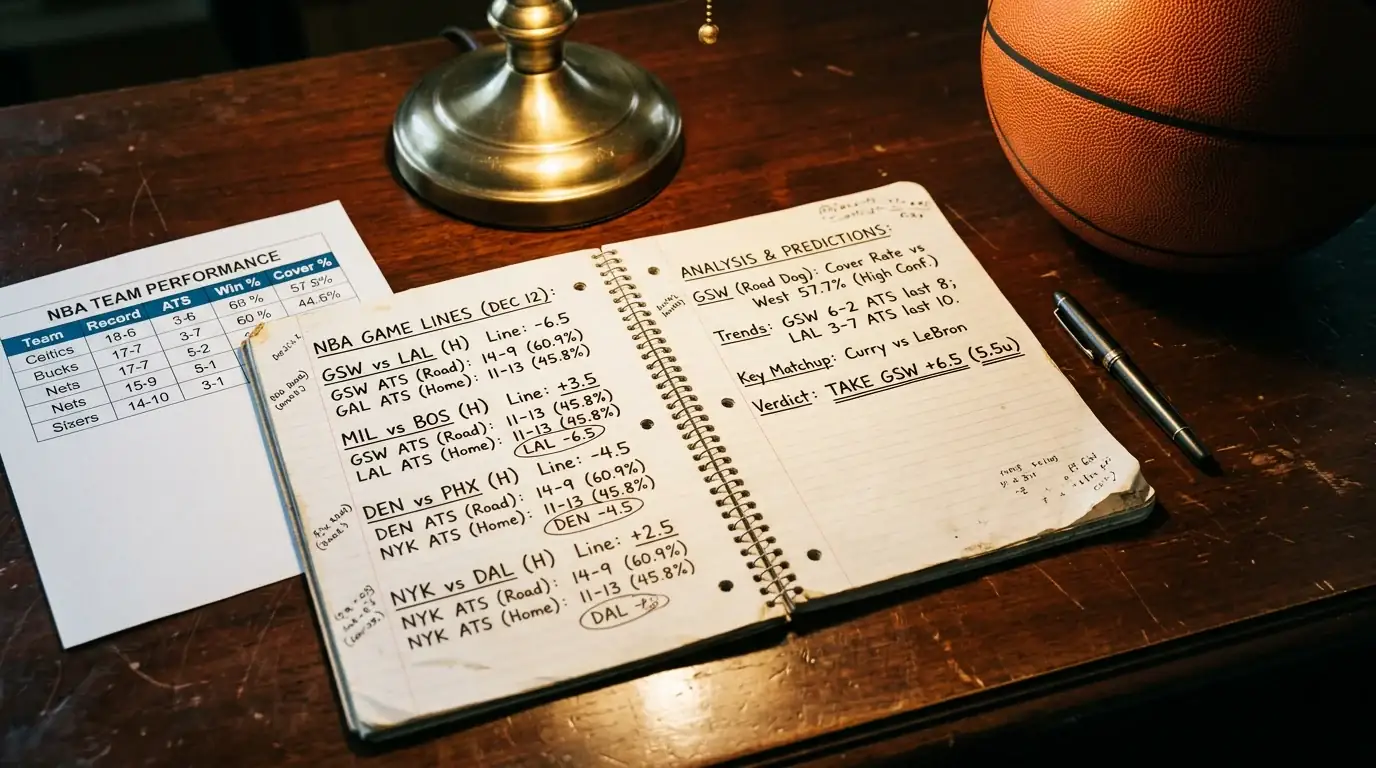
The best ATS performers carry meaningful information. Over 2.5 seasons of tracking, Oklahoma City Thunder held a 69-39 ATS record — a 64% cover rate. Orlando Magic were second at 65-42 (61%). These are the kinds of structural patterns — where line-setting consistently undervalues a team’s margin performance — that create medium-term edges for punters willing to track them. For a full breakdown of how to read and exploit line movement, the NBA point spread strategy guide goes into the analytical framework in detail.
Key Strategic Factors Every UK Basketball Punter Must Analyse
Here is something most basketball betting content does not tell you: the factors that move lines most reliably are not the ones that get the most attention. Everyone talks about injuries to star players. Far fewer people systematically analyse schedule fatigue, home court depreciation, or the gap between what the public backs and what the closing line actually reflects.
Over nine years of betting basketball, I have built a short list of factors that consistently do the analytical work. Not all of them apply to every game — but when two or three align in the same direction, the signal gets much stronger.
Back-to-Back Schedule
Teams playing their second consecutive night cover the spread at only 49.3% since 2005 — but road teams on back-to-backs early in the season actually cover at 57.7%, because bookmakers and the public overadjust for home team advantage.
Home Court Advantage
NBA home teams won 60% of games between 2000–2013. That figure has dropped to 54% and has stabilised there post-pandemic. Many bookmakers still price home court as if it were worth more than it is.
Load Management and Rest
When a star player sits out for rest, the information is typically public well before tip-off — but the line does not always move quickly enough to reflect the true impact. Early bettors who track rest-day announcements get a timing edge.
Public Money vs Sharp Money
When a team receives 65% or more of public bets on a spread, the line moves in their direction — sometimes to a point where fading them becomes the statistically sound play. Tracking where public money concentrates is foundational to contrarian strategy.

Back-to-Back Games: The Numbers Behind the Narrative
Every punter has heard that teams get tired on back-to-back nights. Almost none of them actually know the specific ATS data that makes this fact usable. The headline number — 49.3% cover rate for back-to-back teams since 2005 — is the start, not the end, of the analysis.
The more actionable finding is what happens when you isolate specific scenarios. When a home team playing their second consecutive night receives 65% or more of public bets, they have covered the spread just 84 times in 200 opportunities — a 42% cover rate. Betting against those teams in that precise scenario produced a 58% win rate. That is a real, documented edge that exists because public bettors trust a home team too much when it is playing tired.
Road teams on back-to-backs tell the opposite story, particularly early in the season. From games 2 through 12 of the regular season, road teams in back-to-back situations went 235-172-5 ATS since 2004 — a 57.7% cover rate. A flat £100 bettor following this rule would have profited £5,331 over the sample period. The mechanism is reverse: the market prices the travel-fatigued road team too generously negative, and they outperform the inflated spread. For the full breakdown on how to filter these spots and bet them correctly, see my dedicated guide to NBA back-to-back betting strategy.
Every basketball trend arrives as a win-loss record and a cover percentage. Neither tells you whether the pattern would survive another season. Enter the record and this returns the profit it produced, the confidence it earns, and how many more games it needs before you should trust it.
| Trend as quoted in this guide | Record | Cover rate | Chance it is noise | Verdict |
|---|---|---|---|---|
| Road teams, back-to-back, games 2–12 | 235–172 | 57,74 % | 1,52 % | Holds up |
| Oklahoma City ATS run | 69–39 | 63,89 % | 0,83 % | Holds up |
| Fading tired home teams with public money | 116–84 | 58,00 % | 5,59 % | Not yet |
| All back-to-back teams | 2058–2118 | 49,28 % | — | Below break-even |
The test asks a single question: if a system had no edge at all and simply broke even against the vig, how often would it produce a record this good by luck? Anything under five percent is the conventional threshold for taking a pattern seriously, and the table shows the trends quoted in this guide landing on both sides of it. The road back-to-back edge and the Oklahoma City run clear it comfortably. The fade of tired home teams with heavy public backing does not — at 116 wins from 200, the chance of noise is 5,59%, which is close but short, and roughly fourteen more games at the same rate would settle it. That is not a reason to discard the angle; it is a reason to size it smaller than the ones that have cleared. Two further notes. The overall back-to-back figure of 49,28% is worth reading carefully: it sits below the 52,38% break-even, so it is not a fade signal either, merely evidence that the raw situation carries no edge once the vig is paid — which is exactly why the guide filters it by home, road and public backing rather than betting it flat. And on the profit figure quoted for the road angle: £5.331 would require an average price near 1,96 across the sample, whereas standard spread pricing at 1,909 produces £4.162 and 1,90 produces £3.950. Worth stating which price a backtest assumed, because the gap is a quarter of the return. The calculation uses a one-tailed normal approximation and assumes independent games, which slightly overstates confidence where the same teams recur. More in the guides to back-to-back strategy, point spread strategy and bankroll management. 18+, UKGC-licensed operators only; GambleAware.
Home Court Advantage: The Market Still Hasn't Caught Up
Home court used to be worth six points in some line-setting frameworks. It is not anymore. NBA home teams won 60% of regular season games between 2000 and 2013. By the 2024–25 season, that number has settled around 54% — a significant structural decline driven by improvements in travel logistics, roster depth, load management practices, and the equalisation of arena atmospheres when fans returned post-pandemic.
VSiN analyst Steve Makinen, who has studied NBA home court patterns in depth, noted that the variance in home advantage between the 30 NBA teams can be as high as 1.2 points in either direction — meaning some arenas genuinely matter and some are almost neutral. Betting home teams at a standard spread premium when you are playing at a neutral-atmosphere arena against a rested road team is structurally unsound.
The practical implication: be sceptical of large home team spreads, especially when the team is popular with the public. The overlap between overvalued home favourites and back-to-back situations is where some of the sharpest edges in NBA ATS betting have historically lived. A full breakdown of how home court data applies to spread betting is covered in the home court advantage NBA betting guide.
Smart Money vs Public Money: Reading the Line
Pickswise's editorial team put it clearly: "NBA public betting can be very useful for individual bettors because sportsbooks will adjust their odds to keep their books balanced. Staying ahead of the curve could help you net bigger profits." That is the practical summary of what sharp money analysis actually does.
When a team receives a high percentage of public bets but the line does not move — or moves against them — it means professional bettors are on the other side with enough weight to counteract the public. That reverse line movement is one of the most reliable signals available. UK punters have less direct access to public betting percentage data than American bettors do, but the tools exist, and understanding the principle alone improves your line-reading significantly.
Knowing which factors to analyse is half the equation. The other half is making sure the bets you place are sized correctly relative to your bankroll — because a correct read on a back-to-back situation is worthless if you stake too much on it during a losing run and cannot sustain the drawdown.
Bankroll Management: The Edge Most Bettors Ignore
A House of Lords Gambling Industry Committee report found that 60% of UK gambling industry revenue comes from just 5% of customers — the heaviest bettors, many of whom are problem gamblers or at significant risk. That statistic is striking not just as a social concern, but as a strategic fact: the industry is profiting disproportionately from people who bet too much relative to what they can sustain. Poor staking is the mechanism. It is the reason a bettor with genuinely useful basketball knowledge still ends up losing money.
I have seen this pattern at every level: punters who pick correctly at 54–55% — a genuinely profitable rate against the standard vig — and still drain their bankroll because they stake inconsistently. A big win leads to a larger stake next time. A losing run prompts chasing. The maths of ruin does not care how good your reads are if your sizing is off.
Kelly Criterion (Simplified): The Kelly formula calculates optimal stake size based on your perceived edge and the odds available. Full Kelly = (bp - q) / b, where b = decimal odds minus 1, p = your estimated probability of winning, q = 1 - p. In practice, most serious bettors use Fractional Kelly (25–50% of the full Kelly output) because the formula is highly sensitive to errors in probability estimation. A bet where you estimate 54% probability at 1.90 odds generates a Kelly stake of roughly 2.8% of bankroll. Half Kelly would mean staking 1.4%.
The starting point for any serious punter is flat staking: a fixed percentage of your total bankroll on each bet, regardless of how confident you feel. I use 1–2% per bet as my baseline. This means a run of ten consecutive losses — which happens to every bettor at some point across an NBA season — reduces your bankroll by 10–20%, not by something catastrophic. You can recover from that. You cannot recover from staking 10% per bet and hitting five losers in a row.
The Kelly Criterion refines this by scaling your stake to the size of your perceived edge. The problem is that edge estimation is hard, and overconfidence in your own probability assessment leads to Kelly outputs that are too aggressive. Fractional Kelly — betting 25–50% of what the full formula recommends — preserves the mathematical logic while protecting against the inevitable estimation errors.
Before You Place Any Basketball Bet
- Check the current injury and availability report for both teams — particularly for the starting five and primary rotation players.
- Verify the back-to-back status of both teams and the travel logistics involved (time zones, distance).
- Identify where the line opened and how it has moved — note whether movement matches the direction of public money or opposes it.
- Confirm your stake is within your preset bankroll limit for a single bet (1–3% of total bankroll).
- Check your session record for the week — if you are already down significantly, review whether you are chasing losses rather than identifying genuine value.
- Identify which market you are betting and whether this is the most appropriate market for the edge you believe exists (spread, total, or prop).

For a full breakdown of staking systems — including flat betting, Kelly Criterion, and unit-based tracking — along with how to calculate your actual ROI and closing line value over a season, the basketball bankroll management guide covers all of it in practical terms.
Best UK Bookmakers for Basketball Betting
The UK market has around 5,825 licensed betting shops and a well-developed online sector, but not every UKGC-licensed operator treats basketball equally. For a punter who bets NBA seriously, the differences between operators matter: depth of player prop markets, speed of in-play odds, whether they offer Asian handicap on NBA games, and how competitive their spreads are against the consensus line.
Online platforms now account for 78% of sports betting market revenue in the UK, which means the app and website experience is as important as the pricing. A bookmaker with excellent NBA odds that takes three seconds to update in-play lines is not usable for live betting — and live betting is increasingly where basketball edges emerge.
When evaluating UK bookmakers for basketball betting, I look at five criteria:
| Criterion | Why It Matters for Basketball Betting | What to Look For |
|---|---|---|
| Market Depth | More markets mean more opportunity to find value — particularly on player props and totals where bookmakers are less precise | Game lines, quarter lines, player props (points/rebounds/assists), same-game combinations |
| In-Play Offering | NBA generates significant in-play value during momentum shifts and after lineup changes | Fast odds updates, live streaming integration, quarter and half markets available in-play |
| Odds Competitiveness | Half a point on a spread or 0.05 in decimal odds has measurable long-term impact on profitability | Consistent odds close to 1.90 on standard spread markets; competitive moneyline pricing |
| Coverage Beyond NBA | EuroLeague and BBL offer less efficient pricing because they receive less scrutiny from bookmakers | EuroLeague game lines and totals available; BBL coverage, though limited |
| Mobile Experience | 76% of UK bettors aged 18–24 use mobile — and NBA games tip off at midnight UK time, so mobile is the primary platform | Stable app with quick navigation to NBA markets and reliable in-play functionality at high-traffic times |
The major UKGC-licensed operators — bet365, William Hill, Paddy Power, Betfred, and BetVictor — all cover NBA to varying degrees. bet365 consistently leads on market depth and in-play speed for basketball. Paddy Power and William Hill tend to be competitive on moneyline pricing for high-profile games. Betfred has improved its NBA prop coverage in recent seasons. For a full operator-by-operator comparison with specific market assessments, the guide to the basketball betting markets covers the operator landscape in more detail.
The most important practical step is holding accounts with at least two or three operators simultaneously — what experienced punters call line shopping. When a point spread reads -6.5 at one bookmaker and -6 at another, that half-point is the difference between a winning and losing bet on any game that lands on seven. Over the course of a season, consistently getting the better number compounds significantly. This is not complex strategy — it is basic execution that most casual punters skip entirely.
Responsible Gambling and the Real Risks
I will not dress this up. The Lancet Public Health Commission on Gambling published a landmark report in October 2024 and the numbers are sobering: approximately 450 million adults worldwide are affected by gambling harm, and 80 million live with gambling disorder. The research found that gambling disorder could affect 8.9% of adults who bet on sports — not all gamblers, specifically sports bettors. That is a meaningful proportion of the population that reads content like this and places NBA bets on their phones.
Knowing that does not mean you should not bet. It means you should bet with awareness of where the risk genuinely sits and what the UK system provides to help if you need it.
Risk Awareness: Research published in The Lancet identified that sports betting specifically carries disorder risk for roughly 1 in 11 adult bettors. Adolescents face significantly higher rates. Signs that betting has moved from entertainment to problem include: chasing losses, betting to relieve stress or anxiety, hiding activity from others, neglecting financial obligations, and feeling unable to stop despite wanting to.
The UK has a genuine infrastructure for this. GamStop is the national self-exclusion scheme — registering excludes you from all UKGC-licensed operators for a period of your choosing (minimum six months, maximum five years). GambleAware provides free counselling, information and support via the National Gambling Helpline. These are not marginal resources — they are funded in part through the statutory Gambling Levy that came into force in 2025, which means every bet placed at a licensed UK operator now contributes to their operational funding.
UK Responsible Gambling Tools: Every UKGC-licensed bookmaker is required to offer deposit limits, time limits, loss limits, cooling-off periods, and access to GamStop self-exclusion. These can be set within your account settings and — critically — deposit limit reductions take effect immediately, while increases require a waiting period by regulation. Use them proactively rather than reactively.
The best approach to responsible basketball betting is structural. Set a monthly deposit limit before the season starts. Define your bankroll as a specific amount you are comfortable losing entirely. Never deposit more to cover losses. If you find yourself thinking about bets during working hours or feeling anxious between tip-offs, those are signals worth taking seriously. The GambleAware helpline is free, confidential and available at any time.
Frequently Asked Questions About Basketball Betting in the UK
How does basketball betting work in the UK?
Basketball betting in the UK operates through UKGC-licensed bookmakers — online operators that must hold a valid Gambling Commission licence to legally accept bets from UK residents. The core markets are the same as those available globally: moneyline (picking the outright winner), point spread (betting on the margin of victory or defeat), game totals (over/under on combined score), player props, and futures. What distinguishes UK betting is the odds format — decimal odds are standard (for example, 1.90 rather than the American -110), UKGC regulations govern operator conduct including responsible gambling obligations, and the basketball coverage typically spans NBA, EuroLeague, and to a lesser extent the British Basketball League. You must be 18 or over to bet in the UK.
What is point spread betting in basketball and how do I use it?
Point spread betting (also called handicap betting in UK terminology) involves wagering on whether a team will win by more than a set margin or lose by less than a set margin. The favourite is assigned a negative handicap (for example, -7.5) and the underdog a positive one (+7.5). If you back the favourite at -7.5, they must win by eight or more points for your bet to pay out. The standard odds on both sides of a spread are typically around 1.90 in decimal format, which reflects the bookmaker's margin. Spread betting rewards analytical thinking because you are not simply picking a winner — you are judging whether the bookmaker's assigned margin accurately reflects the true competitive gap between the teams.
Which UK bookmakers are best for NBA betting?
The major UKGC-licensed operators all cover NBA to varying degrees, but not equally. For market depth — particularly player props and in-play markets — bet365 is consistently strong for basketball. William Hill and Paddy Power tend to be competitive on game lines for high-profile fixtures. If you are serious about NBA betting, I recommend holding accounts with at least two or three operators simultaneously so you can compare lines before placing. The difference between -6.5 and -6 on a spread, or between 1.88 and 1.92 on a moneyline, compounds significantly over a full season of betting. All operators mentioned are UKGC-licensed — always verify a licence before depositing.
How does a back-to-back schedule affect basketball bets?
Back-to-back games — where a team plays on consecutive nights — have a measurable and documented effect on ATS results, but not in the straightforward way most punters assume. Teams playing their second consecutive night cover the spread at approximately 49.3% since 2005, a slight underperformance. However, road teams on back-to-backs early in the season (games 2–12) have historically covered at 57.7%, because bookmakers and the public tend to overadjust by making the home team too large a favourite. The most exploitable scenario is when a tired home team receives 65% or more of public bets on their back-to-back night — in those situations, betting against them has produced a 58% win rate historically. The key is filtering for the right scenario, not treating all back-to-back games the same way.
What is value betting in basketball and how do I apply it?
Value betting means placing bets where your assessed probability of an outcome is higher than the implied probability in the bookmaker's odds. For example, if a spread is priced at 1.90 on both sides, the implied probability of either side covering is 52.6% (accounting for the bookmaker's margin). If your analysis — drawing on injury reports, ATS history, schedule factors and line movement — suggests one side has a 57% or better chance of covering, that bet has positive expected value. Value betting does not guarantee winning any individual bet, but applied consistently over a meaningful sample, it produces long-term profit. The critical skill is honest probability estimation — most bettors overestimate their edge, which is why tracking results with genuine closing line value analysis is the only reliable way to know if you are genuinely finding value or just getting lucky.
Is it safe to bet on the NBA online in the UK?
Betting with UKGC-licensed operators is legally compliant and offers meaningful consumer protections: your funds must be held in segregated accounts, disputes can be escalated to the Independent Betting Adjudication Service, and operators are required to offer responsible gambling tools including deposit limits and access to GamStop self-exclusion. Betting with unlicensed offshore operators carries no such protections and is not recommended. The broader question of whether sports betting is personally "safe" depends on the individual — the Lancet's 2024 research found that sports betting specifically is associated with gambling disorder risk for approximately 1 in 11 adult bettors. If betting stops being recreational, GambleAware and GamStop are free UK resources that provide support.
How do I manage my bankroll when betting on basketball?
The foundational rule is flat staking: bet a fixed percentage of your total bankroll on each bet, regardless of confidence level. A starting point of 1–2% per bet is standard for serious punters — this means ten consecutive losses, which every bettor experiences at some point across a season, reduces your bankroll by 10–20% rather than wiping it out. More sophisticated punters use a fractional Kelly Criterion approach, which scales stake size to the perceived edge while avoiding the full Kelly output's aggressiveness. Crucially, never define your bankroll as money you need for other purposes — set aside a specific sum you are genuinely comfortable losing entirely, and treat that as your operating capital. Chasing losses by depositing more is the single most common path to serious financial harm in sports betting.
Created by the ”Basketball Betting Strategies” editorial team.